

毎月、GOWUKAKUは1500人以上の受験者が試験準備を助けて、試験に合格するために受験者にご協力します
Global Commercial Strategy 試験
最新更新時間: 2026/09/21
【秋学習応援セール|10月限定キャンペーン】:L6M2 最新真題を買う時、日本語版と英語版両方を同時に獲得できます。
実際の問題集を練習し、試験のポイントを了解し、テストに申し込むするかどうかを決めることができます。
さらに試験準備時間の35%を節約するには、L6M2 問題集を使用してください。
Question No : 1
SIMULATION
How can Minzburg’s 5Ps assist an organisation to develop its global strategy?
正解: Mintzberg’s 5Ps and Global Strategy Development
Introduction
Henry Mintzberg’s 5Ps of Strategy is a framework that helps organizations understand the multiple perspectives of strategy. It recognizes that strategy is not just a planned activity but evolves through deliberate and emergent actions. The 5Ps―Plan, Ploy, Pattern, Position, and Perspective―help organizations develop an effective global strategy by providing a structured approach to decision-making and competitive positioning.
Question No : 2
SIMULATION
Discuss 5 tasks of strategic management
正解: Five Key Tasks of Strategic Management
Introduction
Strategic management involves formulating, implementing, and evaluating a company's long-term goals to achieve competitive advantage. It ensures that an organization effectively aligns its resources, capabilities, and market position to meet its objectives.
The strategic management process can be broken down into five key tasks:
Question No : 3
Application of the BCG Matrix in the Beverage Industry
XYZ can apply the BCG Matrix by reviewing its entire product portfolio across different geographic markets.
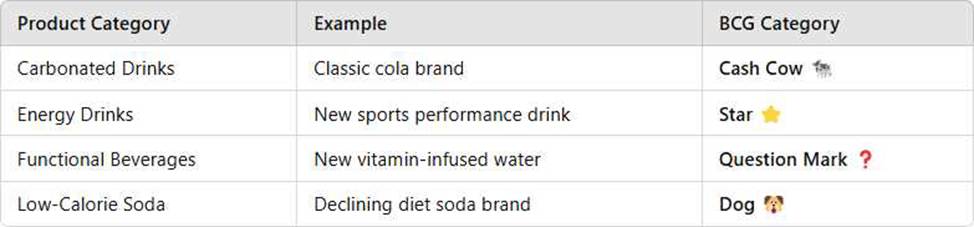
Conclusion
The BCG Matrix is a valuable strategic tool for XYZ to analyze its product portfolio, prioritize investments, and make informed market-based decisions. However, it should be used alongside other strategic models (e.g., PESTLE, VRIO) to ensure a comprehensive business strategy.
正解: Boston Consulting Group (BCG) Matrix and Strategic Decision-Making for XYZ
Question No : 4
SIMULATION
Describe and evaluate the use of the VRIO Framework in understanding the internal resources and competencies of an organisation.
正解: The VRIO Framework: Understanding Internal Resources and Competencies
The VRIO Framework is a strategic analysis tool used to assess an organization’s internal resources and competencies to determine whether they provide a sustainable competitive advantage. Developed by Jay Barney, VRIO stands for Value, Rarity, Imitability, and Organization.
Question No : 5
SIMULATION
XYZ is a construction firm which builds houses in Birmingham. Discuss a tool that it can use to assess the remote environment and discuss a tool it can use to evaluate the operating environment.
正解: Environmental Analysis Tools for XYZ Construction Firm
To make strategic decisions, XYZ Construction needs to assess both the remote environment (external macro factors) and the operating environment (industry-specific and competitive factors). Two widely used tools for these assessments are:
PESTLE Analysis C for analyzing the remote environment Porter’s Five Forces C for evaluating the operating environment
Question No : 6
SIMULATION
Explain how culture and historic influences can impact upon a business’s strategic decisions and positioning within the marketplace
正解: How Culture and Historic Influences Impact Strategic Decisions and Market Positioning
A business’s strategic decisions and positioning within the marketplace are shaped by both organizational culture and historical influences. These factors affect how a company develops strategy, interacts with customers, manages employees, and competes globally.
Question No : 7
SIMULATION
Examine how an organisation can strategically position itself within the marketplace.
正解: How an Organization Can Strategically Position Itself in the Marketplace
Strategic positioning is the process by which an organization differentiates itself from competitors and establishes a strong, sustainable presence in the market. It involves making key decisions regarding branding, pricing, customer engagement, and competitive advantage to attract and retain customers.
Below are the key strategies an organization can use to position itself strategically in the marketplace:
Question No : 8
SIMULATION
XYZ is a toilet paper manufacturer based in the UK. It has 2 large factories employing over 500 staff and a complex supply chain sourcing paper from different forests around the world. XYZ is making some strategic changes to the way it operates including changes to staffing structure and introducing more automation. Discuss 4 causes of resistance to change that staff at XYZ may experience and examine how the CEO of XYZ can successfully manage this resistance to change
正解: Causes of Resistance to Change & Strategies to Manage It C XYZ Case Study
When XYZ, a UK-based toilet paper manufacturer, implements strategic changes such as staff restructuring and automation, employees may resist change due to uncertainty, fear, and disruption to their work environment. Below are four key causes of resistance and how the CEO can manage them effectively.
Causes of Resistance to Change
Question No : 9
SIMULATION
Explain the characteristics of strategic decisions. At what level of a business are strategic decisions made and why?
正解: Characteristics of Strategic Decisions
Strategic decisions are long-term, high-impact choices that shape a company’s future direction.
These decisions differ from operational and tactical decisions in several key ways: Long-Term Focus C Strategic decisions determine the future direction of a business, often spanning several years.
Example: A company deciding to expand into international markets.
Significant Impact C They affect the entire organization, influencing growth, profitability, and market positioning.
Example: A shift from a brick-and-mortar retail model to an e-commerce-based approach.
Resource Intensive C They require large financial, human, and technological resources to implement.
Example: Investing in AI-driven supply chain automation.
High Risk and Uncertainty C These decisions involve considerable risks due to market changes, competition, and external factors.
Example: Entering an emerging market with regulatory and political risks.
Difficult to Reverse C Strategic decisions are not easily changed without significant costs or consequences.
Example: Mergers and acquisitions require extensive planning and are challenging to undo. Cross-Functional Involvement C They require input from multiple departments (finance, marketing, operations, IT).
Example: A new product launch involves R&D, marketing, supply chain, and finance teams. Aimed at Gaining Competitive Advantage C The goal is to improve the company’s market position and long-term success.
Example: Tesla’s focus on electric vehicle technology and charging infrastructure.
At What Level Are Strategic Decisions Made?
Strategic decisions are made at the corporate and business levels, typically by senior management and executives. The three levels of decision-making in a company are:
Question No : 10
SIMULATION
Describe 5 strategic decisions a company can make and how these decisions could impact upon competitive advantage.
正解: Five Strategic Decisions a Company Can Make and Their Impact on Competitive Advantage Strategic decisions shape a company's direction and influence its long-term success.
Below are five key strategic decisions and their impact on competitive advantage: